
What are the components of an exhaust system?
If you've ever wondered, what are the components of an exhaust system? the answer includes several parts that work together to remove exhaust gases, reduce noise, and control emissions. The system is made up of several elements, each with a specific function. If one of them develops a problem, you may hear odd noises, notice unusual smells from the exhaust, or see changes in your vehicle's performance.
The exhaust system consists of the following major components:
- Exhaust Manifold. The exhaust manifold collects the exhaust gases from the engine cylinders and conveys them into the exhaust pipes. It is subjected to very high temperatures whenever the engine is operating. This heat can lead to cracks or leaks over time that can impact engine performance.
- Oxygen Sensors. These sensors measure the amount of oxygen remaining in the exhaust gases. They pass this information to the engine control unit, which uses it to fine-tune the air-fuel mixture. This helps the engine operate properly and reduces emissions.
- Catalytic Converter. The catalytic converter helps reduce harmful emissions from exhaust gases before they are released from the vehicle. It converts gases such as carbon monoxide and nitrogen oxides into less harmful substances. This is an important component of the vehicle's emissions control system.
- Resonator. A resonator regulates certain sounds produced by the engine and exhaust gases. It helps reduce harsh or unwanted sounds along with the muffler. Some exhaust systems do not have a separate resonator.
- Muffler. The muffler is used to decrease the noise produced by exhaust gases exiting the engine. It has chambers and tubes that help reduce noise. When it develops rust or holes, or becomes loose, you may hear loud noises or rattling under your vehicle.
- Tailpipe. The tailpipe is the last part of the exhaust system. It carries exhaust gases away from the vehicle and releases them behind it, reducing the chance of fumes building up underneath the vehicle.
Why Is It Crucial to Take Notice of Exhaust Issues?
What are the components of an exhaust system? Knowing the different parts can help you identify problems more easily. A muffler may become louder than usual, for instance, due to rust, internal damage, or loose connections. Other signs to watch for include strange smells and changes in engine performance.
Do not overlook these signs. If you hear strange noises or notice unusual exhaust fumes, get the exhaust system checked by a mechanic. A leak or faulty component can develop into a bigger problem if it is not dealt with. Having it checked early can help prevent further damage.
Question about what are the components of an exhaust system? Contact our ASE-certified technicians at Express Auto Service & Repair for more information about muffler and to schedule an appointment. Our auto shop serves vehicle owners in Mankato, MN,, and the neighboring communities of North Mankato, MN, New Ulm, MN, and St. Peter, MN.
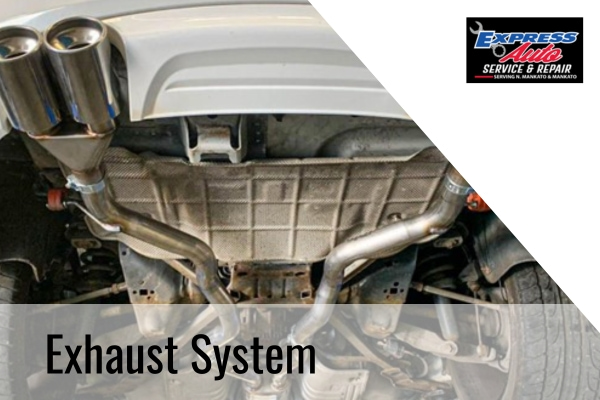
If you've ever wondered, what are the components of an exhaust system? the answer includes several parts that work together to remove exhaust gases, reduce noise, and control emissions. The system is made up of several elements, each with a specific function. If one of them develops a problem, you may hear odd noises, notice unusual smells from the exhaust, or see changes in your vehicle's performance.
The exhaust system consists of the following major components:
- Exhaust Manifold. The exhaust manifold collects the exhaust gases from the engine cylinders and conveys them into the exhaust pipes. It is subjected to very high temperatures whenever the engine is operating. This heat can lead to cracks or leaks over time that can impact engine performance.
- Oxygen Sensors. These sensors measure the amount of oxygen remaining in the exhaust gases. They pass this information to the engine control unit, which uses it to fine-tune the air-fuel mixture. This helps the engine operate properly and reduces emissions.
- Catalytic Converter. The catalytic converter helps reduce harmful emissions from exhaust gases before they are released from the vehicle. It converts gases such as carbon monoxide and nitrogen oxides into less harmful substances. This is an important component of the vehicle's emissions control system.
- Resonator. A resonator regulates certain sounds produced by the engine and exhaust gases. It helps reduce harsh or unwanted sounds along with the muffler. Some exhaust systems do not have a separate resonator.
- Muffler. The muffler is used to decrease the noise produced by exhaust gases exiting the engine. It has chambers and tubes that help reduce noise. When it develops rust or holes, or becomes loose, you may hear loud noises or rattling under your vehicle.
- Tailpipe. The tailpipe is the last part of the exhaust system. It carries exhaust gases away from the vehicle and releases them behind it, reducing the chance of fumes building up underneath the vehicle.
Why Is It Crucial to Take Notice of Exhaust Issues?
What are the components of an exhaust system? Knowing the different parts can help you identify problems more easily. A muffler may become louder than usual, for instance, due to rust, internal damage, or loose connections. Other signs to watch for include strange smells and changes in engine performance.
Do not overlook these signs. If you hear strange noises or notice unusual exhaust fumes, get the exhaust system checked by a mechanic. A leak or faulty component can develop into a bigger problem if it is not dealt with. Having it checked early can help prevent further damage.
Question about what are the components of an exhaust system? Contact our ASE-certified technicians at Express Auto Service & Repair for more information about muffler and to schedule an appointment. Our auto shop serves vehicle owners in Mankato, MN,, and the neighboring communities of North Mankato, MN, New Ulm, MN, and St. Peter, MN.